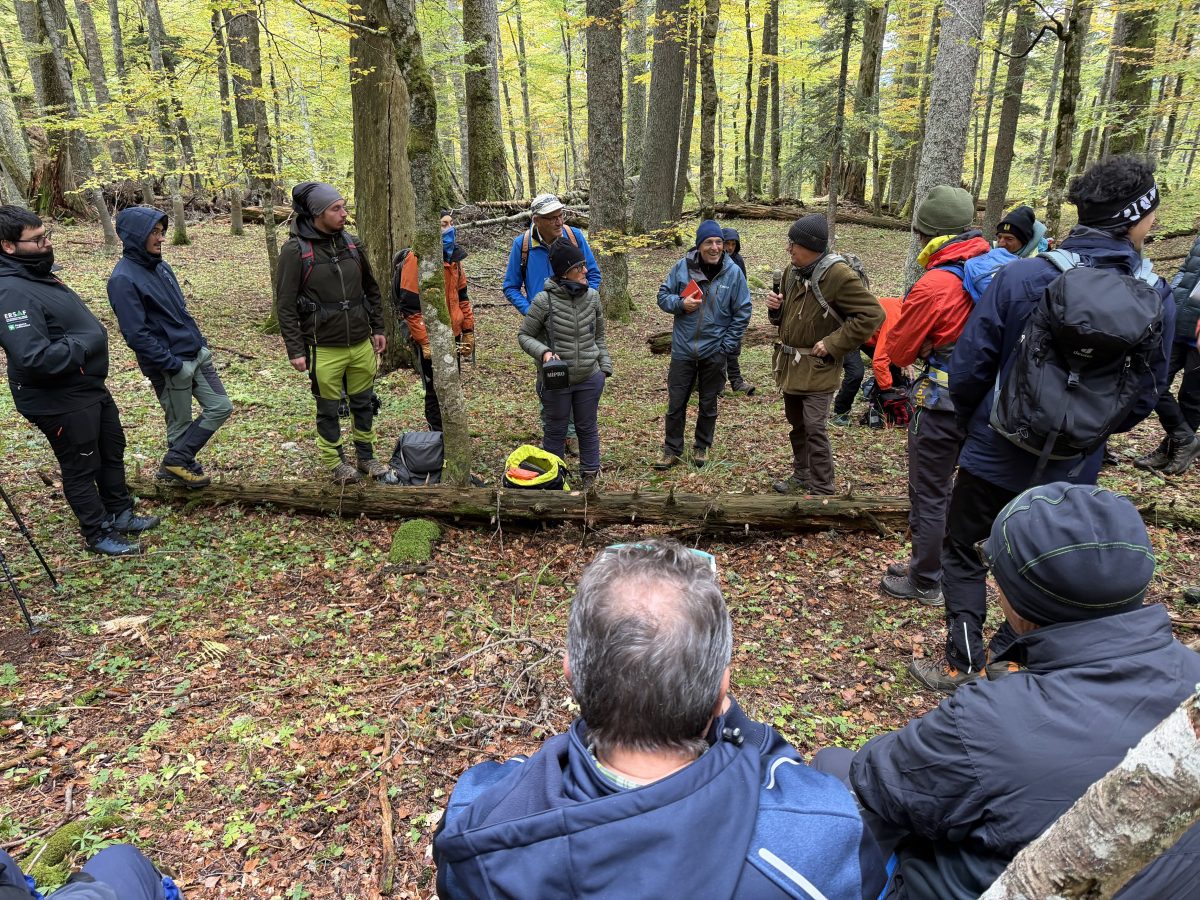
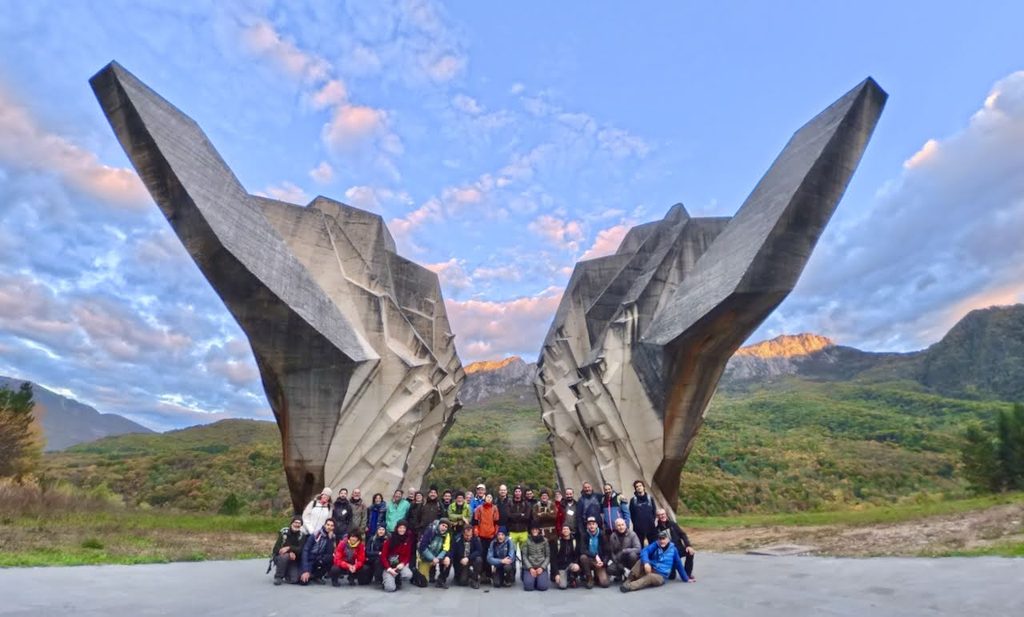
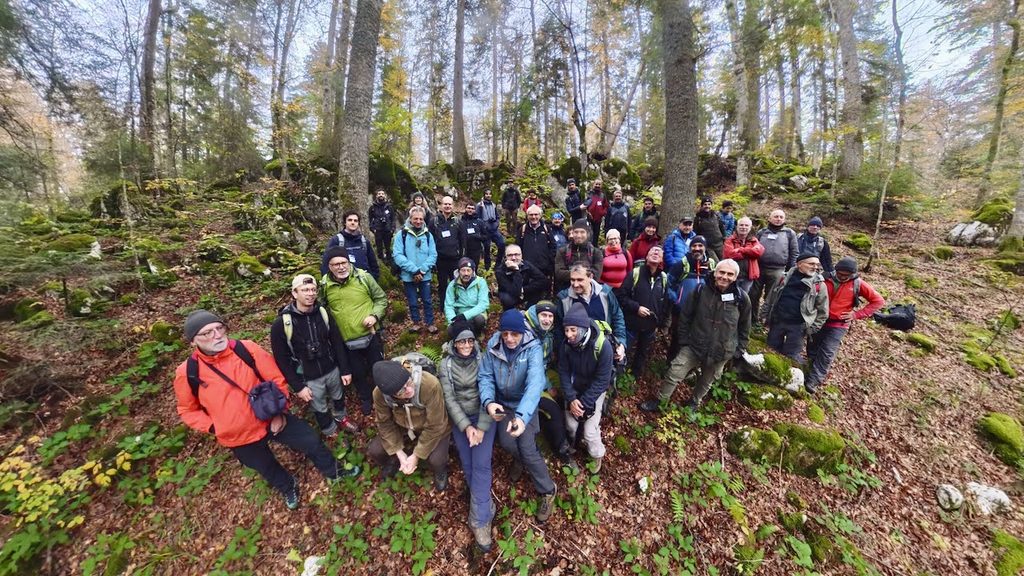
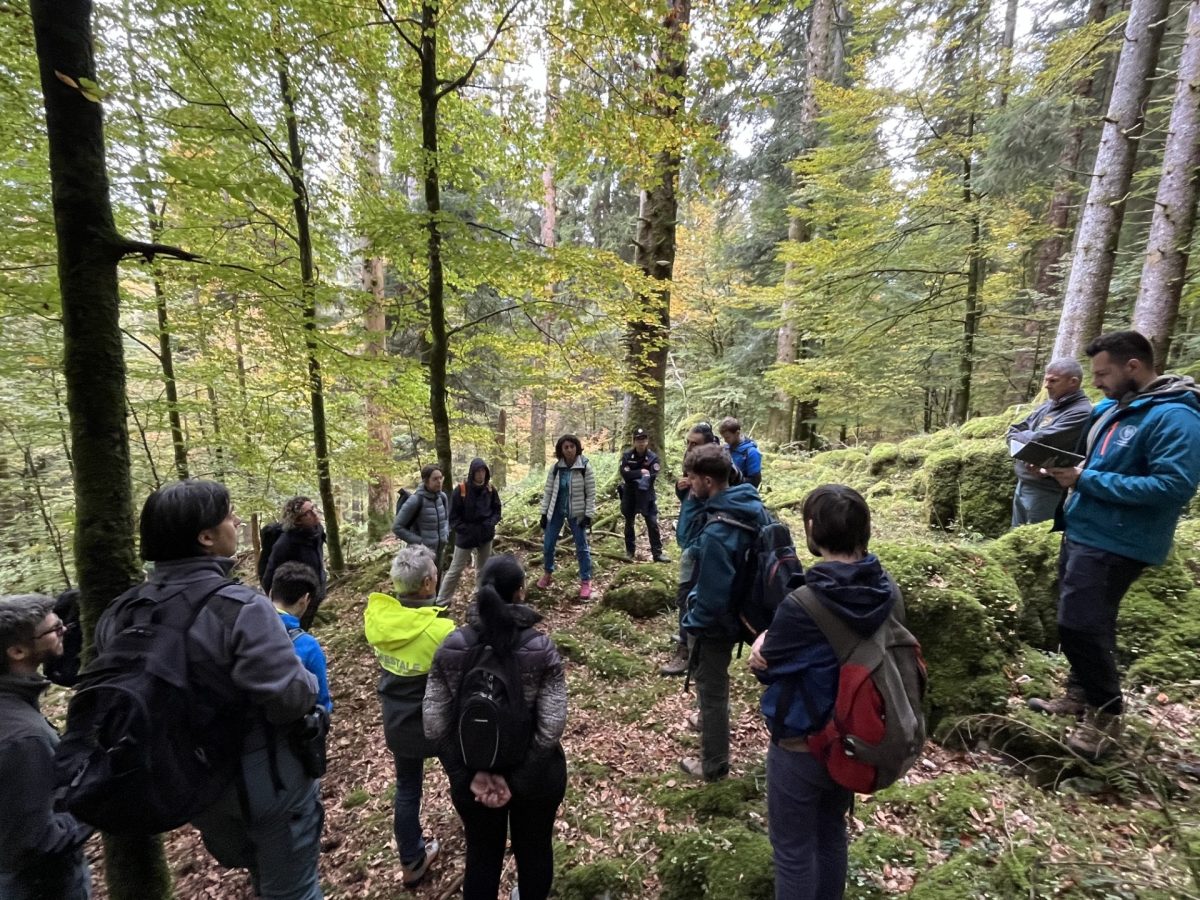
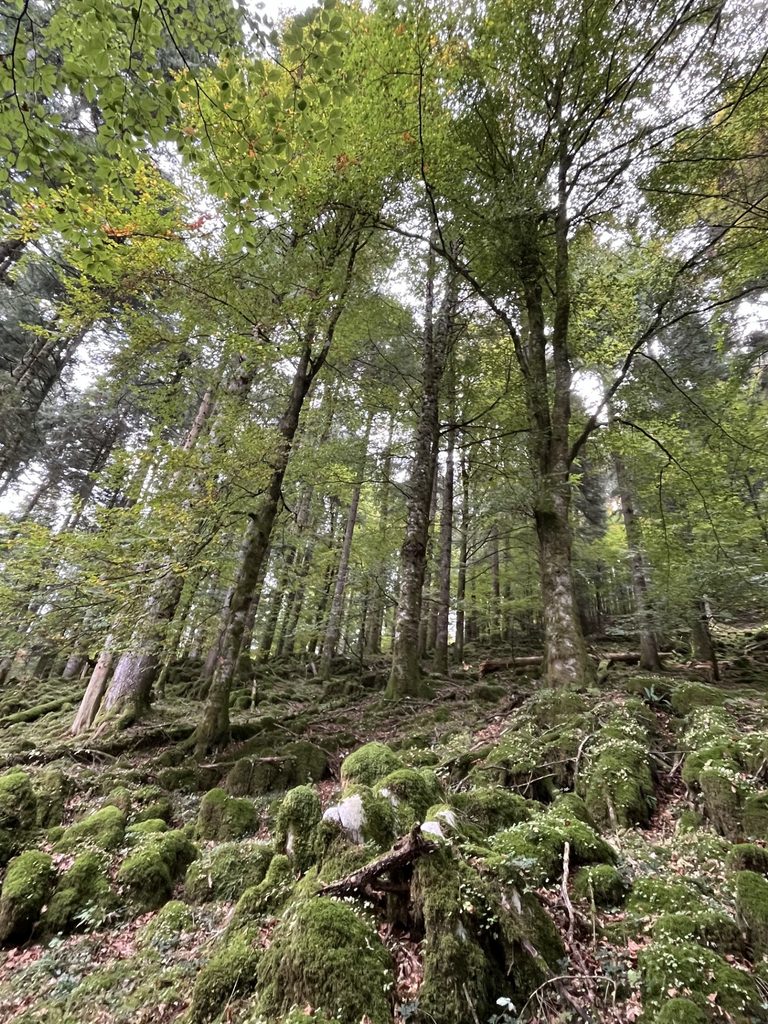
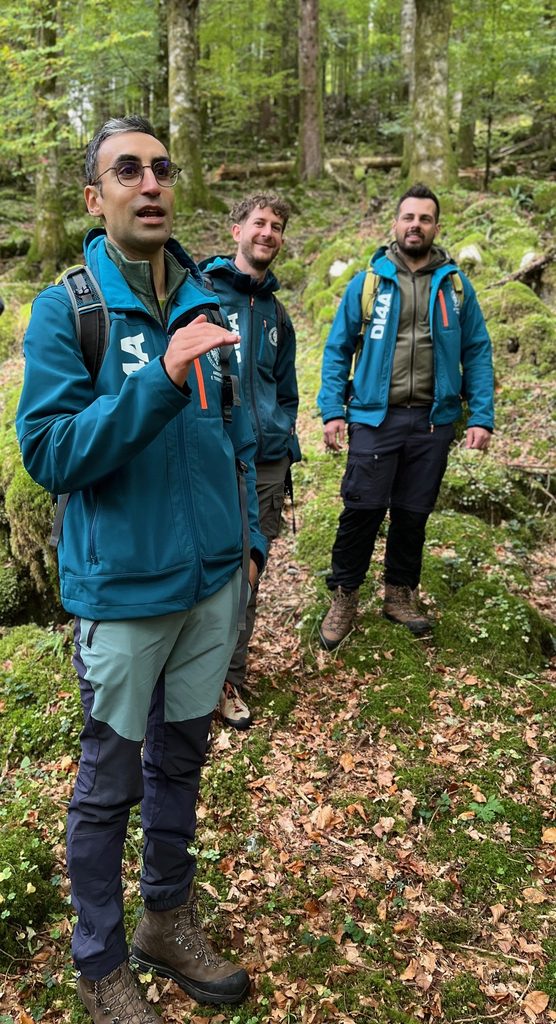
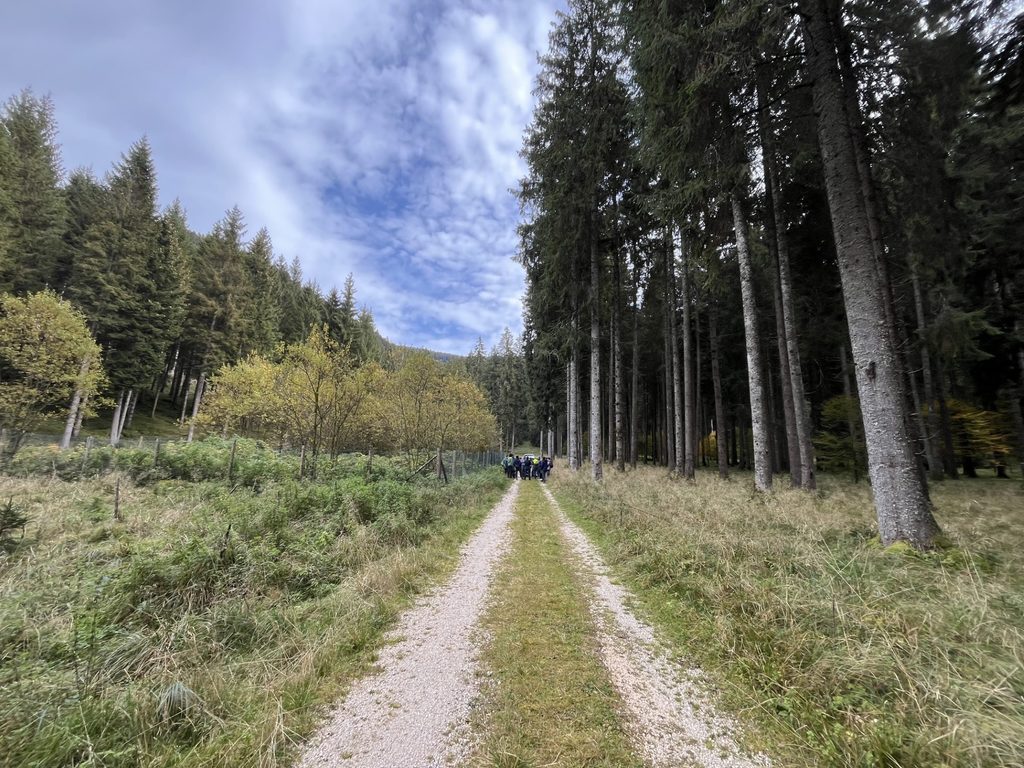
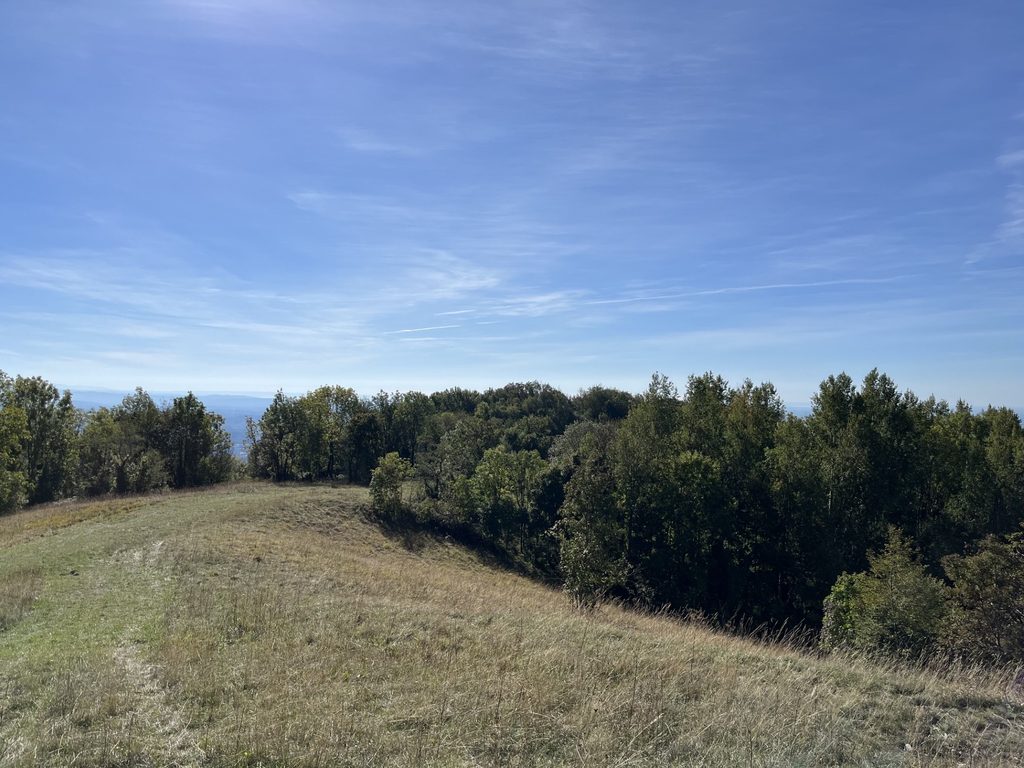
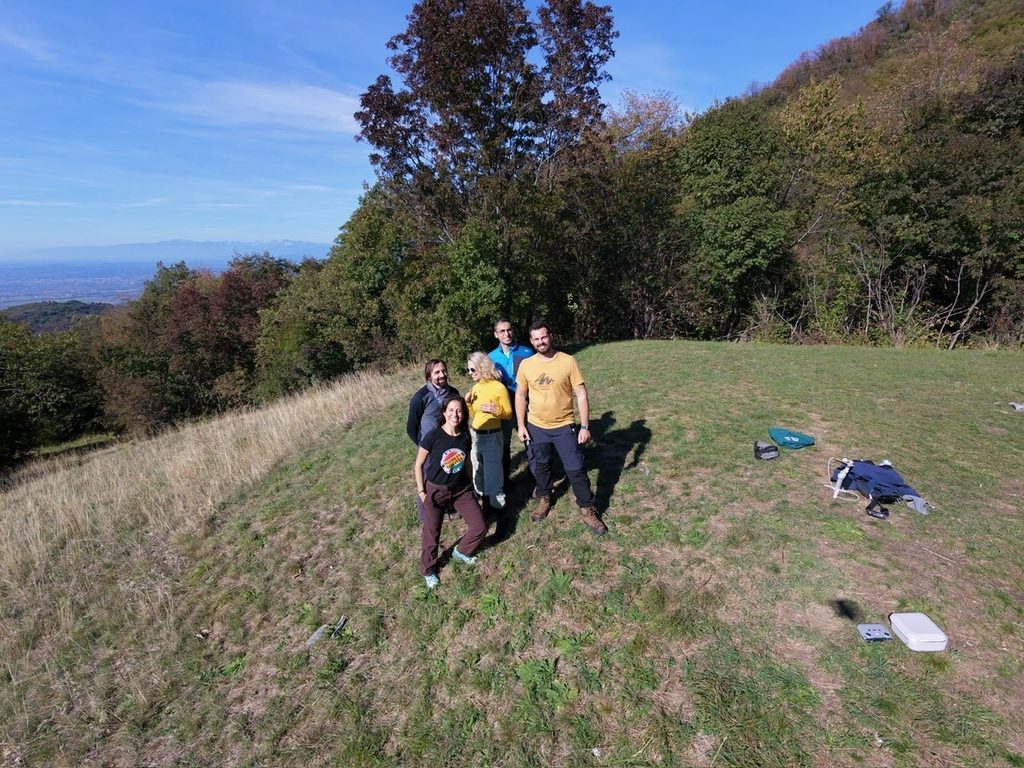
Pro Silva Italy recently visited the Wildcard case study sites in Lom and Perućica, Bosnia and Herzegovina, to explore old-growth forests (OGFs) and their value for biodiversity, carbon storage, and sustainable forest management.
The field trip introduced participants to the Wildcard project’s objectives and methodologies for forest sampling and data analysis. Discussions and field observations focused on differences in forest structure and species composition between managed forests and old-growth forests, natural regeneration processes, and the quantity and quality of deadwood and its contribution to biodiversity and carbon stocks.
Participants also examined carbon accumulation across different forest compartments, compared carbon stocks in old-growth and managed forests, and discussed the limitations of current carbon estimation methods and emerging approaches to improve them.
The visit highlighted the value of old-growth forests as reference systems for understanding natural forest dynamics and informing close-to-nature silviculture. Lessons from the Wildcard case study sites can help strengthen the evidence base for the Pro Silva approach and support forest management that better integrates biodiversity conservation, climate mitigation, and natural forest processes.
What happens when forests are left to develop naturally? How does wildlife influence forest regeneration? And what do we gain and lose when forests reclaim land that was once managed by people?
As part of the Wildcard project, in collaboration with the University of Udine, we went on a two-day study trip to explore these questions across two fascinating – and very different – Wildcard case study sites in the Friuli Venezia Giulia region of Northeastern Italy.
On the first day, joined by more than 20 forest managers, researchers, forestry experts and representatives of different associations, we explored how ecological processes, historical land use and local traditions continue to shape the region’s forests and landscapes.
Old forests, new insights
Our first stop was the Cansiglio Forest, where we visited stands displaying impressive old-growth characteristics. Researcher Antonio Tomao introduced us to the ecological processes unfolding in forests that have been left to develop with minimal human intervention. The Pian delle Stele reserve has been established in the early 1970s, with the last management intervention taking place more than 60 years ago, allowing natural processes to shape the forest over several decades.
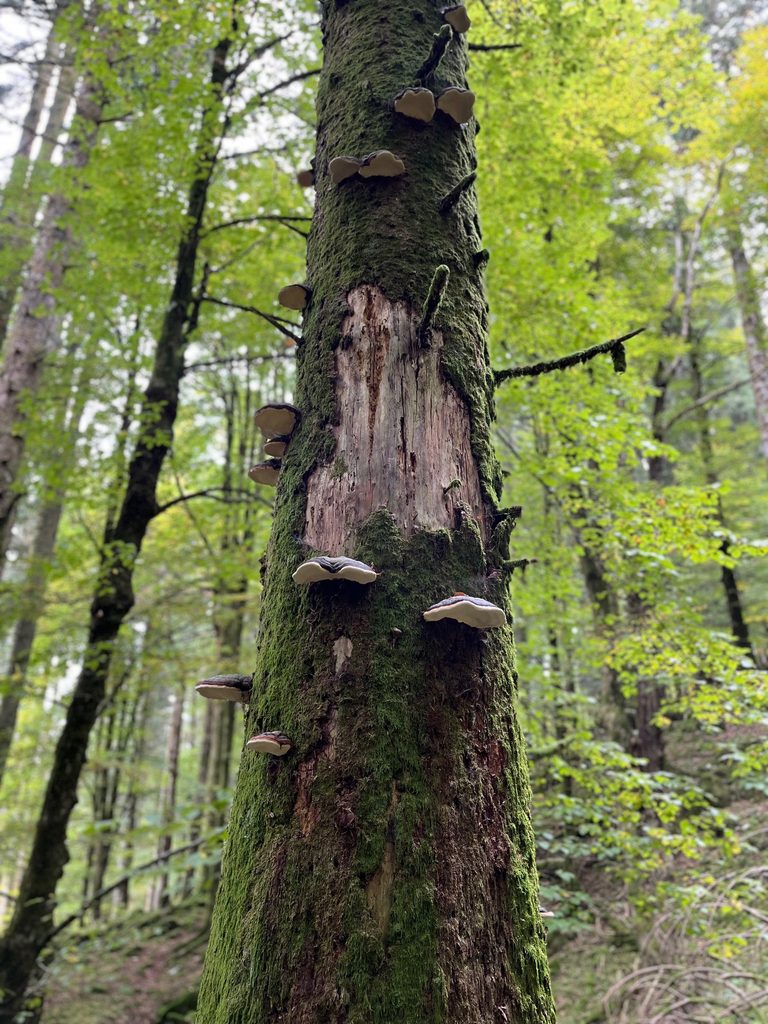
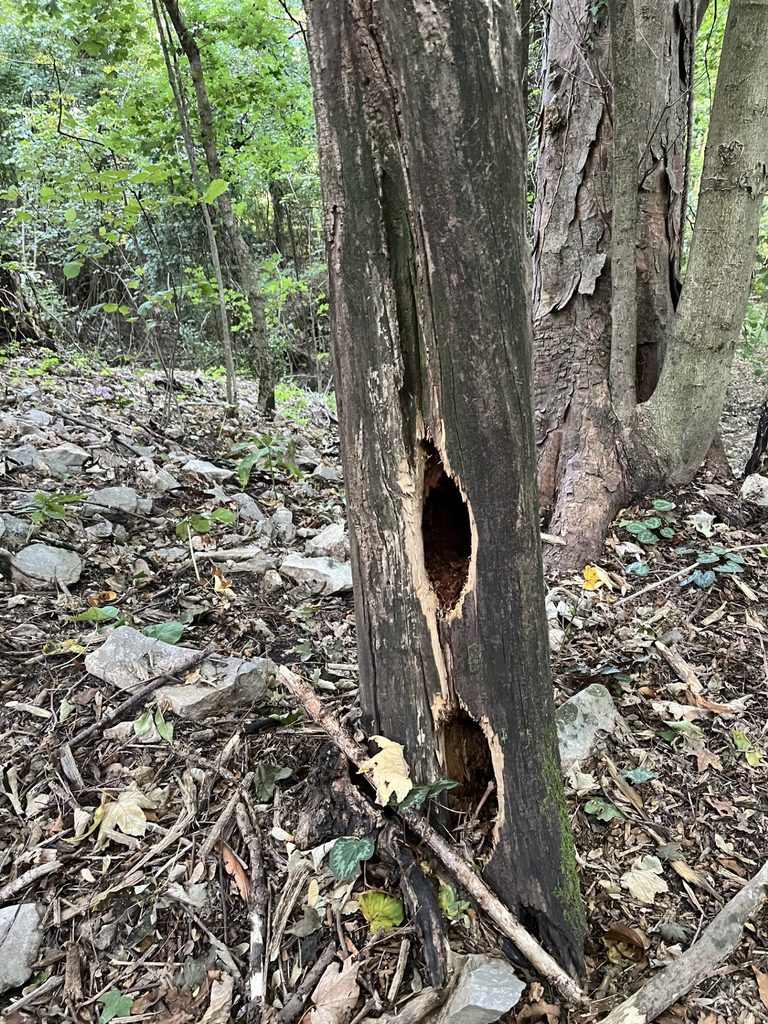
The landscape offered plenty to discover: abundant deadwood, fascinating fungi, tree cavities and a remarkable variety of microhabitats. Natural disturbances create structural diversity, providing essential habitats for species that depend on mature trees and decaying wood, including rare beetles and fungi. These features remind us that a forest’s ecological value extends far beyond the number of living trees it contains. It was beautiful to see how impressed and proud the participants were, for example when we found a Hericium erinaceus, a rare fungus that only grows on deadwood. Every 200 meters we had to make a break, both for the experts to explain the diverse forest features, as well as for the group to take several photos. From researcher Guido Marcoz we learnt that the group of scientists from University of Udine has found rare woodpeckers and a small owl, that only nests in holes that were formerly occupied by woodpeckers. What an excitement the researchers must have felt identifying these species with on-the-ground data collection techniques like sound recording – it was still visible when listening to Guido. “These species need a lot of deadwood”, Guido stated, and we learned that “by leaving standing and laying deadwood to decay also in forests managed for wood production, it is possible to promote these habitats as well”.
Cansiglio forest with a lot of deadwood Impressive Fungi, habitat to several small animals and organismsResearchers Antonio Tomao, Guido Marcoz and Alessandro Foscari (University of Udine)
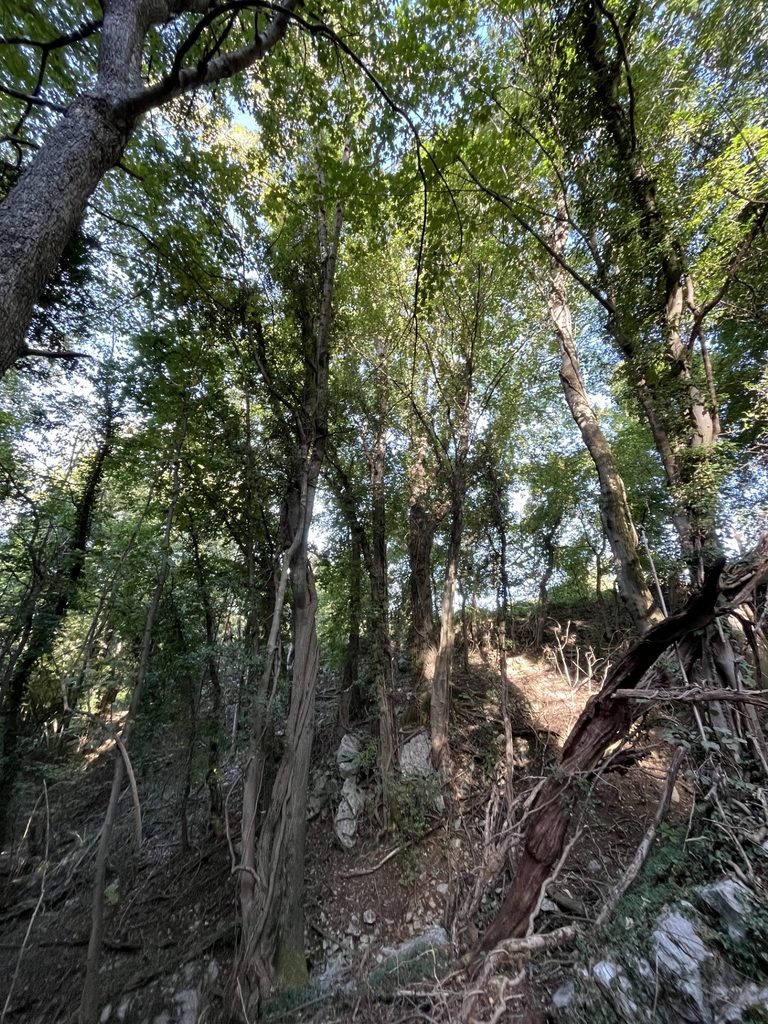
While hiking through the wild and steep forest, we also explored how old-growth forests contribute to carbon storage and sequestration, and how biodiversity develops as forests mature. One particularly interesting question was how these forests respond to climate change. While their structural complexity and natural processes offer valuable insights into forest resilience, understanding their long-term responses remains an important research challenge.
“We need to make the people aware of the different forest functions, and that there can be conflicts of interests depending on which function is prioritized”, said forestry advisor Fabio Cogo. He also mentioned that – apart from carbon credits – there are very few options to get funding for setting forests aside for conservation purposes, and that this funding is usually only beneficial for a small group of stakeholders.
How forest development is shaped by wild animals
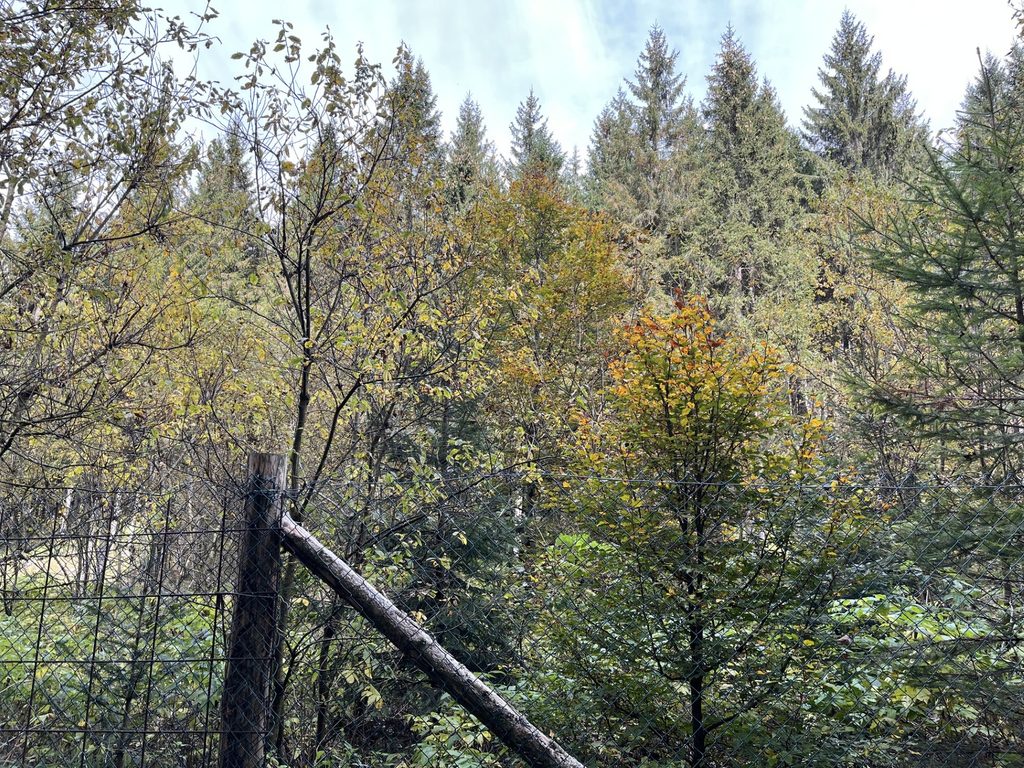
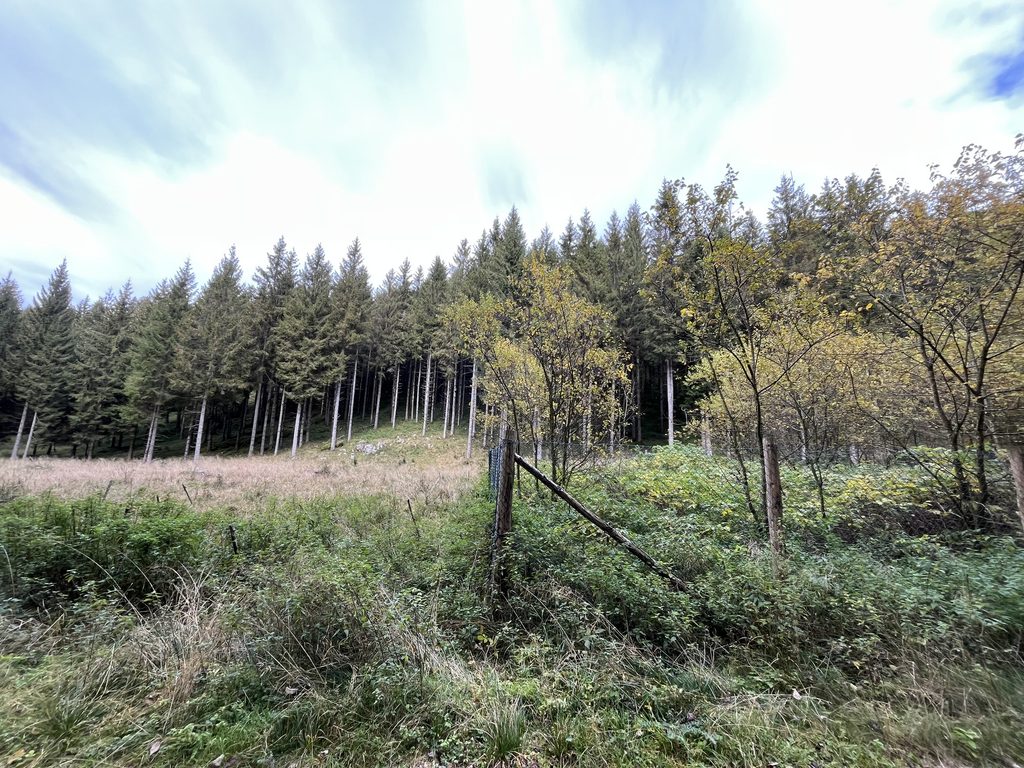
Yet natural forest development does not happen without pressures. Deer browsing, for example, can significantly limit natural regeneration and reduce the diversity of tree species. At our second stop, we saw a striking illustration of this challenge, presented to us by forest manager Roberto Luise, the local forest manager. An area protected by fencing for 15–20 years showed a remarkable difference in regeneration compared with the unfenced forest across the road, where young trees were scarce and shrubs dominated. We also discussed the potential of hunting – which we learnt is not allowed in the area – and the option of re-introducing the wolf. Roberto stated that the wolf plays an important role in addressing the game situation, “but it cannot be the only solution”, added Roberto. Seeing the effects of browsing on forest regeneration was a powerful reminder that natural processes are shaped not only by the management – or the absence of it – but also by the presence of wildlife and the conditions surrounding the forest.
Group of experts visiting the fenced areaFenced regeneration with diverse tree speciesDifference between natural regeneration in fenced area and the surrounding landscape
Local communities as a key to success?
From Federica Biondo we learnt that there is still a lot to do in terms of taking local communities onboard, raising both their awareness and support for the local forests and their benefits. This is why her organization Legno Servizi, supporting the forest-wood sector in the Friuli Venezia Giulia region, has recently established forest education centers in both Udine and Triest. These were founded to contribute to their main objective, promoting sustainable forest management and the use of local wood through a range of dissemination, research, communication and project development activities.
Finally, in the evening, after most of the participants went home, we met Giulia Zanuttigh in Udine, about 2 hours away from Cansiglio forest. Giulia is a member of the Italian Alpine Club and works at the Municipality of Udine. She emphasized that local people should have an influence on what is happening with the forests near their homes. This could involve being allowed to cut forests to use the land as a meadow, as was done in the past. She also sees potential for more tourism, but less related to forests and their biodiversity but more related to the cultural use of forests and land.
When the forest returns: a visit to Soffumbergo
On the second day, we turned our attention to Soffumbergo, a landscape that tells a different story of forest change. Around 80 years ago, much of this area consisted of open meadows and pastures. Following the devastating earthquake of 1976, many residents left their villages, and agricultural land was gradually abandoned. Forests subsequently reclaimed these open spaces, with species such as maple, ash and hornbeam establishing themselves under the region’s favourable growing conditions.
Today, tall trees, woodland habitats and signs of wildlife reveal the ecological opportunities created by this transformation. At the same time, the expanding forest tells a story of disappearing cultural landscapes. Traditional agroforestry systems, including meadows dotted with chestnut trees, once supported local livelihoods and shaped the identity of the villages. Their decline means losing not only familiar landscapes, but also traditional knowledge, land-use practices and elements of local cultural heritage.
Microhabitats, providing nests to birds and other small animalsFormer meadows overgrown with forest
Between rewilding and cultural landscapes
Managing these changing landscapes is further complicated by fragmented land ownership. Some parcels are extremely small, ownership records are outdated, and identifying the people responsible for abandoned land can be difficult. Local initiatives like “Pro Loco” are therefore exploring ways to coordinate land management, maintain open areas near villages and restore selected meadows where this can support cultural values, tourism and landscape resilience. One engaging example we learned about was the “Chestnut Festival”. This event is organized by Pro Loco in the small village Valle di Soffumbergo, which has around 10 inhabitants, but several hundred visitors for the Festival. At the heart of the village, we met Giorgio Dri, who told us about the history of the area, and about the impacts of the land abandonment. He emphasized that the impressive nature is attractive for ecotourism, and proudly shared that they organize different activities with tourists throughout the year. These include for example forest bathing and an excursion to the forest in the night of San Lorenzo on 10th August, where visitors can see the shooting stars at night, and are welcomed back to Soffumbergo with a “Pasta asciutta” at midnight. However, with wildlife being so close to their houses, he also expressed his concern regarding wild boars, destroying the local gardens.
Our final stop, at the aptly named “Meadows of the Church”, offered another striking perspective: a place where open land is increasingly being taken over by forest. We realized that the only meadow left there – most likely the place where visitors watch the shooting starts – might also been taken over by forests in the next years.
Meadows of the ChurchWildcard project team, organizers of the study trip
Across both days, one message became clear: forest change is never just an ecological story. It is also a story about history, livelihoods, biodiversity, climate, ownership and the relationship between people and their landscapes. And Rewilding does not represent a universal solution, but rather a set of context-specific strategies whose success depends on the ability to manage ecological, economic and social conflicts at local scale, integrating restoration interventions and natural dynamics with the needs of local landscapes and communities.
The Wildcard study trip provided a valuable opportunity to exchange perspectives, learn from local experience and reflect on the choices facing forest managers today. Rather than asking whether intervention or non-intervention is always the right answer, these landscapes invite us to consider a more nuanced question: what kind of forest and landscape do we want to sustain, and for whom?
Pian de le Stele, one of WILDCARD’s proforestation study sites in the Cansiglio Forest, has been officially recognised as an old-growth forest and is now included in Italy’s National Network of Old-Growth Forests.
Located in the municipality of Polcenigo, in the Friuli Venezia Giulia region, Pian de le Stele is among the first forest stands in Italy to receive this recognition. Together with Bosco Vintulins and Croseraz-Val Bona, it was formally included in the national network following ministerial decisions on 6 August 2026.
Protected as an integral reserve since 1971 and free from timber harvesting for more than 60 years, the 14.36-hectare silver fir forest provides an important example of long-term natural forest development. Surveys carried out by researchers at the University of Udine have documented characteristics associated with mature forest ecosystems, including large trees, substantial carbon stocks, abundant standing and lying deadwood, and a diversity of tree-related microhabitats supporting numerous species.
Pian de le Stele also has a direct connection to WILDCARD. The site is part of the project’s network of research sites and contributes to our work investigating proforestation – the process of allowing existing forests to continue growing and develop naturally by reducing or suspending forest management interventions.
Being included in Italy’s National Network of Old-Growth Forests is therefore an important step towards protecting the site in the long term. It also highlights the ecological value that forests can develop when natural processes are allowed to continue over time.
The recognition follows research led by the University of Udine’s Department of Agricultural, Food, Environmental and Animal Sciences, coordinated by Wildcard coordinator Giorgio Alberti, as part of a wider study promoted by the Forest Service of the Friuli Venezia Giulia Region.
Read the full press release from the University of Udine in Italian (here) to learn more about the recognition, the characteristics of these old-growth forests and the research behind their designation.
Featured photo: Pian de le Stelle forest by Alessandro Foscari
The first time I walked through a primary forest in the Low Tatras in Slovakia, I was struck by how different it looked and felt from the forests I had known before. Woody fungi called Polypores, larger than both of my hands emerged from the deadwood littered across the forest floor. Spruce trees bore horizontal scars left by three toed woodpeckers searching for insects beneath the bark. Beneath a tree more than 200 years old, a patch of cleared earth marked the resting place of a brown bear. At every step, the forest revealed something new and unexpected.
These remaining primary and old-growth forests offer a rare glimpse into ecosystems that existed before centuries of intensive land use and forest management reshaped much of Europe. Today, however, they survive only in small, isolated fragments and continue to decline rapidly due to logging. Their loss is of particular concern because these forests support exceptionally high levels of biodiversity and provide important ecosystem services like carbon storage and water regulation.
Ecosystem services: old growth forest in Slovakia (photo: Lyla O’Brien)Biodiversity: old growth forest in Slovakia (photo: Lyla O’Brien)
Together with other researchers, I published a perspective article in Conservation Letters, titled Priority actions for the conservation of primary and old-growth forests in Europe. In the article, we examine how the recently adopted Nature Restoration Regulation could strengthen the long-term conservation of Europe’s remaining primary and old-growth forests. Although the EU Biodiversity Strategy for 2030 calls for their strict protection, the target is not legally binding and implementation has progressed slowly. We argue that, despite not explicitly referring to primary and old-growth forests, the Regulation nonetheless presents an exceptional opportunity to advance their conservation.
We therefore identify four key problems for the conservation of these forests and propose four accompanying actions that we consider most urgent, while exploring how the Regulation could support their implementation (Table 1).
First, incomplete mapping and weak protection should be addressed by identifying barriers and introducing a logging moratorium for unprotected forests, including those that are unmapped.
Second, human pressures should be reduced in and around primary and old-growth forests by banning logging, avoiding new roads, limiting infrastructure and recreation, and regulating hunting practices.
Third, because many forests are too small and fragmented, strict protection should be expanded and buffer zones established to maintain ecological processes and reduce external anthropogenic disturbances.
Fourth, connectivity between isolated forest patches should be improved and new old-growth forests should be developed through active restoration or by letting nature recover on its own passively.
The paper shows that conserving Europe’s primary and old-growth forests requires more than formal protection goals; it needs targeted, complementary action, which can be implemented under the Nature Restoration Regulation.
Table 1: Priority actions for improving the conservation of primary and old-growth forests in the EU and relevant articles for achieving them embedded in the National Restoration Regulation
Problem
Priority action
Key elements
Link to NRR
Significant gaps in mapping and protection
1. Assess progress and address barriers to identification, mapping, and protection; implement a logging moratorium
Identify implementation barriers to mapping and protection; integrate findings into EU progress assessments; impose a moratorium on mapped but unprotected and potential primary and old-growth forests
Article 4(12) non-deterioration clause
Anthropogenic impacts, also in protected forests
2. Prevent degradation from anthropogenic pressures and protect natural processes
No new forest roads; no logging; limited infrastructure and recreation; relocation of ungulate hunting; ban on supplementary feeding
Small, fragmented patches, limiting natural disturbance dynamics and increasing vulnerability
3. Expand strict protection and establish buffer zones around primary and old-growth forests
Expand strictly protected area to meet minimum dynamic area; Establish protection and conservation buffer zones
Article 4(1) restoration of degraded habitat types listed in Annex 1 to good condition; Article 12(1) enhancement of forest; Article 12(3) increase in the national trend for at least six of the following seven indicators for forest biodiversity: standing deadwood, lying deadwood, share of forests with uneven-aged structure, forest connectivity, stock of organic carbon, and share of forests dominated by native tree species and tree species diversity
Fragmentation and isolation, which threatens persistence of associated species, lack of representative network of primary and old-growth forests
4. Improve connectivity between primary and old-growth forests and create secondary old-growth forests through restoration
Restore patches of land to reconnect forests and promote secondary old-growth forests through passive and active restoration
With this article, we urge EU Member States to incorporate these priority actions into their national restoration plans before the end of 2026, providing an opportunity for the EU to move beyond broad political commitments toward concrete conservation outcomes for some of Europe’s most valuable and threatened forests.
Reference: O’Brien, L., Castelli, F., Felton, A., Kuemmerle, T., Mikoláš, M., Munteanu, C., Sabatini, F. M., Svensson, J., Svoboda, M., Vandekerkhove, K., Winkel, G., & Lindner, M. (2026). Priority actions for the conservation of primary and old-growth forests in Europe. Conservation Letters. https://doi.org/10.1111/con4.70054
We are living in a decisive moment, facing two connected global challenges: the loss of biodiversity and climate change. As rising temperatures accelerate the disappearance of species, it is clear we need to rethink how we live with nature and how we manage our land. Traditional conservation efforts have had mixed success, and more and more attention is turning to restoration – bringing nature back – as a lasting solution.
The UN Decade on Ecosystem Restoration and the EU Nature Restoration Law both urge member states to “prevent, halt, and reverse” ecosystem degradation. In Friuli Venezia Giulia (FVG, Italy), a WILDCARD Case Study, nature is already making a comeback: over the past 50–60 years, forest cover has nearly doubled (from 160.000 to over 300.000 ha), now covering around 40% of the region. Much of this change has happened quietly as old pastures and terraced fields were left to rewild, with a warming climate helping forests spread higher up the mountains, as shown in a research by Valentina Olmo (University of Trieste) and a team of researchers from different countries, including WILDCARD Coordinator Giorgio Alberti. Across the EU, the story is similar: since the 1990s, forested areas have increased by about 14 million hectares, clear evidence that passive rewilding is already reshaping the landscape.
Example of the recolonisation of abandoned meadows by forest vegetation in the municipality of Tapiana, Udine (Credits: Luca Cadez)
Pros and Cons of Rewilding
Olmo and her team caution that more trees do not always mean more biodiversity. Their initial findings have shown that the trajectories of plant and microbial biodiversity in the soil (fungi and bacteria) and those of carbon do not always coincide or are not always positive. Moreover, numerous national and international projects are investigating not only the impacts of natural reforestation on carbon stock dynamics in the various components of the ecosystem and on plant, animal and microorganisms’ biodiversity, but they are also verifying the level of acceptability of these rewilding processes by local populations and the possible economic tradeoffs.
The purple line in the four graphs shows the trends in the abundance (number of species) of the herbaceous plants, woody plants, fungi and bacteria as carbon accumulated in forest stands of different ages, originating from abandoned agricultural land. It can be seen that the number of species, particularly plants and fungi, increased with the increase in accumulated carbon (and the age of the stand) up to a certain point and then decreases. As of bacteria, however, there is an almost linear growth in relation to accumulated carbon. This suggests that ecosystems with greater carbon accumulation are not always the most favourable for biodiversity conservation, and that this relationship depends on the organisms considered (Credits: Lorenzo Orzan)
Proforestation: Letting Forests Mature
A complementary approach, proforestation, simply suspends timber management to let stands age naturally. Accumulating deadwood boosts carbon storage and creates microhabitats for fungi, insects, and cavity-nesting birds. The Wildcard project and the newly established Italian National Registry of Old-Growth Forests are studying how unmanaged stands handle climate stress, fire risk, and pests. Whereas scaling proforestation more widely must also weigh timber, water regulation, soil protection, and tourism values. Achieving such a balance will require dialogue among scientists, planners, and stakeholders.
Letting forests regrow naturally or leaving them unmanaged, can help tackle biodiversity loss and climate change. Europe’s restoration policies show how abandoned farmland has turned into forest and weigh the benefits and trade-offs of these approaches for carbon storage, biodiversity, and local economies.
To learn more about it and the case of Friuli Venezia Giulia (FVG), read the article by clicking on the link below (only in Italian):
What if rewilding Europe were a strategic board game – where every forest hides a secret, and every move helps decide the fate of our ecosystems?
Welcome to WILDCARD. The Forest Game, an exciting new podcast that turns the complex science of ecological restoration into an immersive, continent-spanning adventure. Produced by our WILDCARD project in collaboration with Starter, this innovative audio series invites listeners to journey through Europe’s diverse and often overlooked forest landscapes, exploring how damaged ecosystems can be restored and reimagined.
Each episode of The Forest Game acts as a “strategic move” on a metaphorical game board. Listeners join scientists, researchers, and forest experts in unraveling stories of nature – from identifying remnants of true wilderness to balancing human needs with ecological integrity. Along the way, they encounter powerful narratives of transformation and hope, as well as strategies to bring forests back to life in all their complexity.
By using the metaphor of a board game, the podcast breaks down complex ecological concepts into engaging, accessible narratives. Every dice roll reveals new challenges – wildfires, invasive species, fragmentation – while each game square unveils a tale of resilience, research, and renewal. The result is a unique blend of entertainment and scientific insight, making forest restoration not only understandable, but thrilling.
The series is written by Silvia Giralucci (Starter) and produced under the scientific supervision of Giorgio Alberti from the University of Udine. Editorial guidance comes from Gesche Schifferdecker of the European Forest Institute (EFI), with voice-over by Rahel Könen and post-production by Santiago Alarcón, also of EFI.
Whether you’re an environmental enthusiast, a science lover, or simply curious about the future of Europe’s landscapes, WILDCARD. The Forest Game offers a fresh and thought-provoking perspective on one of the most pressing challenges of our time. Ready to roll the dice on the future of our forests? Tune in and play along: WILDCARD: The Forest Game Podcast – Wildcard
In the quiet forests of Northeastern Romania, near the town of Suceava, a remarkable rewilding story is unfolding.
This short film takes us into the heart of Vânători Neamț Nature Park, where the European bison, once extinct in the wild, is once again roaming free. The journey began in the 1970s, when the first bison were brought to Romania by the National Forest Administration. But it wasn’t until 2003, with support from a World Bank project, that the dream of rewilding took real shape, with infrastructure built and the first animals arriving in the park.
By 2012, the first five bison were released into the wild. Since then, more have followed, year after year, slowly rebuilding a population that had vanished. But this isn’t just about restoring a species. It’s about restoring balance between open fields and forest, between people and nature.
The European bison is more than a keystone species. It’s a national symbol, deeply woven into Romanian and Moldavian heritage. Its presence now supports local economies, from eco-tourism to traditional crafts, and fulfills important EU conservation goals.
And while the term “rewilding” may be new to some, the idea isn’t. As Laura Bouriaud from the Stefan cel Mare University of Suceava says, “we are living with nature. Even if we didn’t put this name on it, rewilding is part of our life.”
Carbon storage is one of the most important ecosystem services provided by forests to society. However, methods to monitor and report forest carbon stocks are still poorly understood. A new paper by WILDCARD researchers of the Universities of Turin and Udine, in Italy, compares different methods to estimate carbon stocks in old-growth forests of the Dinaric Alps in the Balkans, finding that direct and indirect methods result in significantly different carbon estimates.
The paper compares direct carbon assessment methods, such as field measurements, with indirect approaches, such as IPCC standard methods, finding that the latter tend to underestimate and overestimate carbon stocks, depending on the site considered. It also revealed that a few large trees (5%) concentrate a high amount of carbon stock (36% of carbon) in the study areas, which store a total of 507 Mg C ha−1. The results indicate that old-growth forests in the Dinaric Alps are the largest forest carbon sinks in Europe.
The paper “The largest European forest carbon sinks are in the Dinaric Alps old-growth forests: comparison of direct measurements and standardised approaches” was co-authored by researchers from the Universities of Montenegro and Banja.
Old-growth forests continue to disappear in Europe, with many being logged before their identification and protection. To help map these important ecosystems for conservation and research, a new paper by WILDCARD researchers uses rigorous criteria to identify old-growth mountain forest stands in Bosnia-Herzegovina and Montenegro that have reached their last stage of ecosystem dynamics.
Co-authored by WILDCARD researchers Renzo Motta (University of Turin), Giorgio Alberti (University of Udine) and Davide Ascoli (University of Turin), the paper looks into a network of four mixed montane old-growth forests in the Dinaric Alps of Bosnia-Herzegovina and Montenegro, one of the few regions in temperate Europe that still holds old-growth forests. Strict indicators were applied to investigate forests characterised by structure, disturbance history and processes typical and exclusive of the last stage of the forest dynamic.
The researchers found that the studied old-growth sites harbour a high amount of living biomass, including ample presence of trees larger than 1 meter at breast height and older than 400 years. The sites were also found to have a high biomass of wood from dead trees. This results in the highest forest carbon sink at the continental level in Europe, totalling 398-484 Mg C ha-1. The Dinaric old-growth forest network presents robust indicators of old-growthness, similar structure, and dynamic processes across all four investigated sites, representing high-priority sites for forest protection.
Although the EU Biodiversity Strategy for 2030 provides a broad definition of old-growth forests, using strict indicators to map specific old-growth forest areas is important for both forest conservation and research, as it contributes to the establishment of conservation priorities, offers reliable reference sites for ecosystem restoration, and helps to further ongoing research on the structural differences between managed and unmanaged forests.
In most EU countries, very few old-growth forests remain and they are typically small and isolated. While the EU Biodiversity Strategy mandates their legal protection, old-growth forest loss continues unabated, with less than 1.5 million hectares of old-growth forests remaining in Europe.